AI Summit
May 5, 2026

ai-summit_2026

About the AI Summit

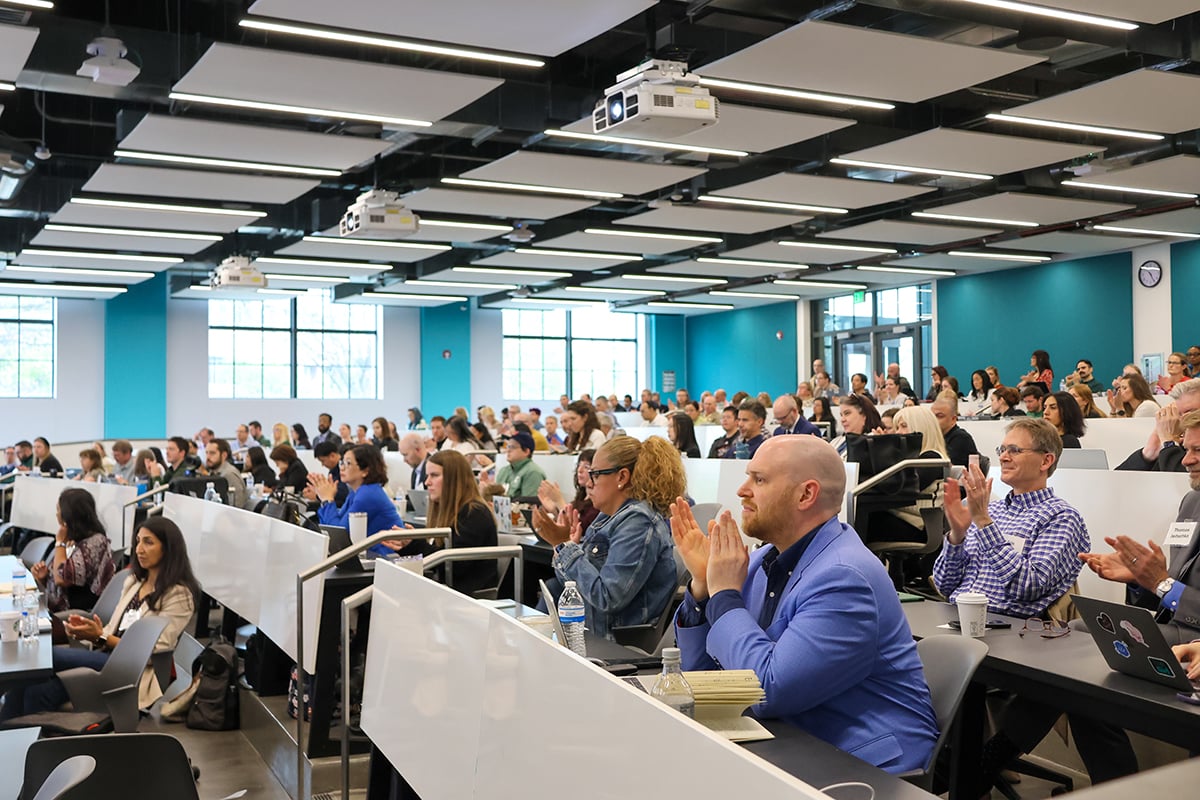
The second annual MSU Ethics AI Summit will be held on Tuesday, May 5, 2026, at the STEM Teaching and Learning Facility. This event will bring together faculty, staff, librarians, and students from across disciplines to highlight AI innovation at MSU and shape our institution’s role in AI education, research, and everyday use.

Campus will be activated the first week of May, with events focused on teaching and learning innovation, student success, and graduate teaching support. We hope these events will offer opportunities for creative crossovers and strategic collaboration.

Registration is open! The deadline is Monday, April 27, 2026. Please note that we are now at capacity for all in-person activities at this event (plenary, lunch, and breakout groups).

If you have questions regarding the AI Summit, please contact Ana Lesage, MSU Ethics Institute assistant director.
 

Register for the AI Summit

Agenda

Check out the detailed agenda for more information: MSU Ethics AI Summit Detailed Agenda

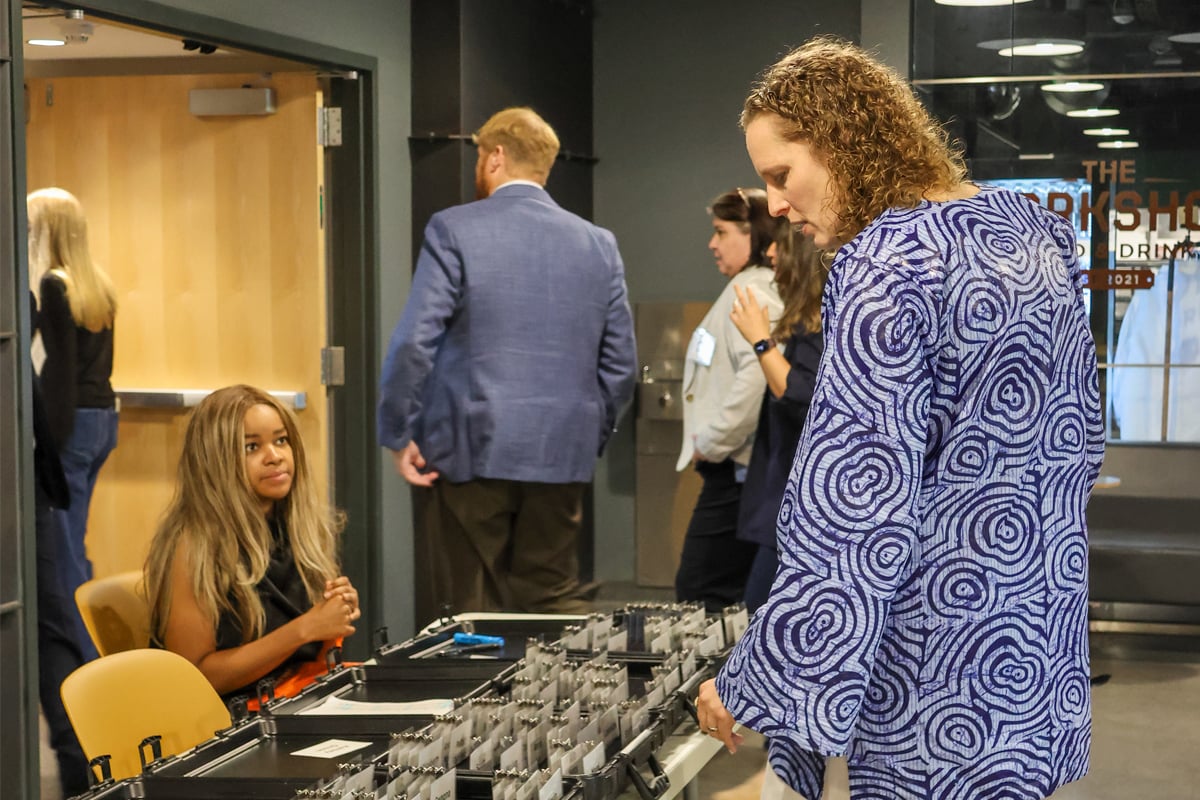
  • 8 a.m. – Registration
  • 8:45 a.m. – Welcome
  • 9 a.m. – Keynote Address: AI Governance and The University: Ethical AI Use, Public Engagement, and Social Responsibility in Higher Education – Madelyn Rose Sanfilippo, Ph.D., University of Illinois at Urbana-Champaign
  • 9:50 a.m. - Break
  • 10 a.m. – Flash Talk  
    • Analog Pedagogy in a Digital Renaissance – Jeremy Van Hof, Ph.D.
    • Critical Perspectives on Artificial Intelligence – Gillian MacDonald, Ph.D.
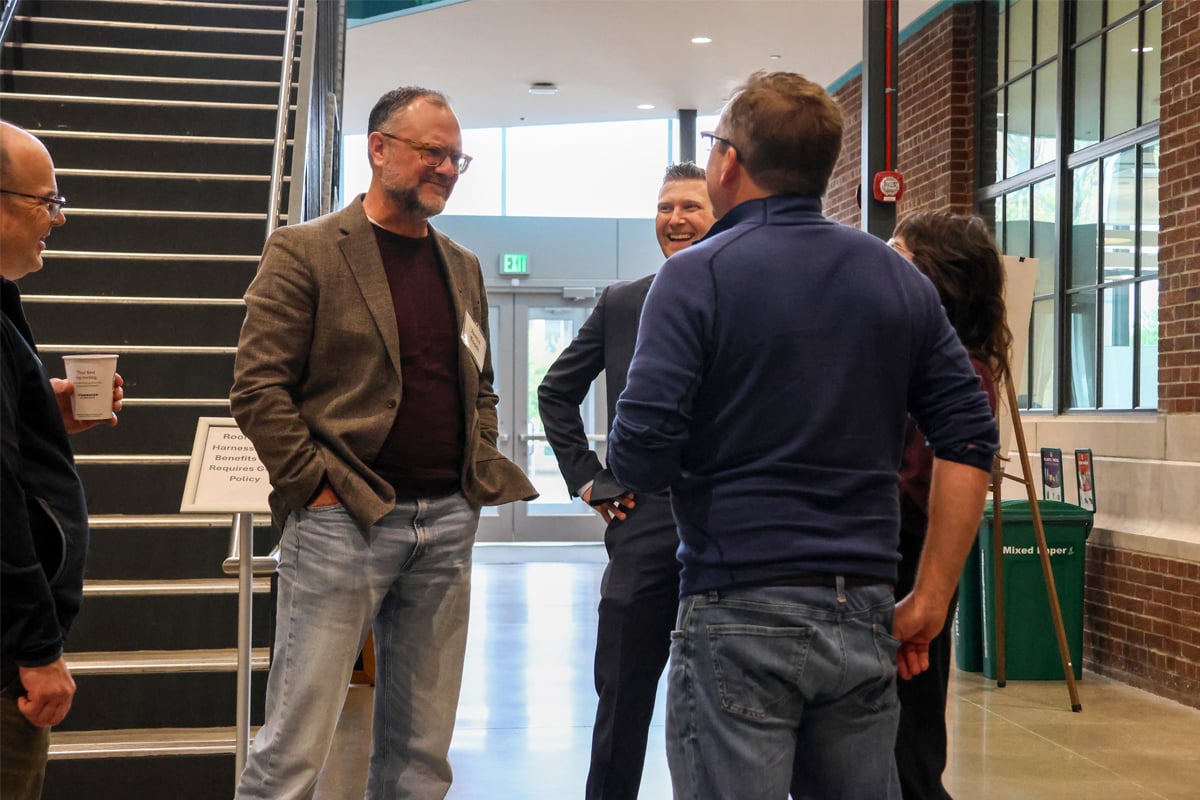
    • Harnessing the Benefits of AI Requires Good Policy – Johannes Bauer, Ph.D.
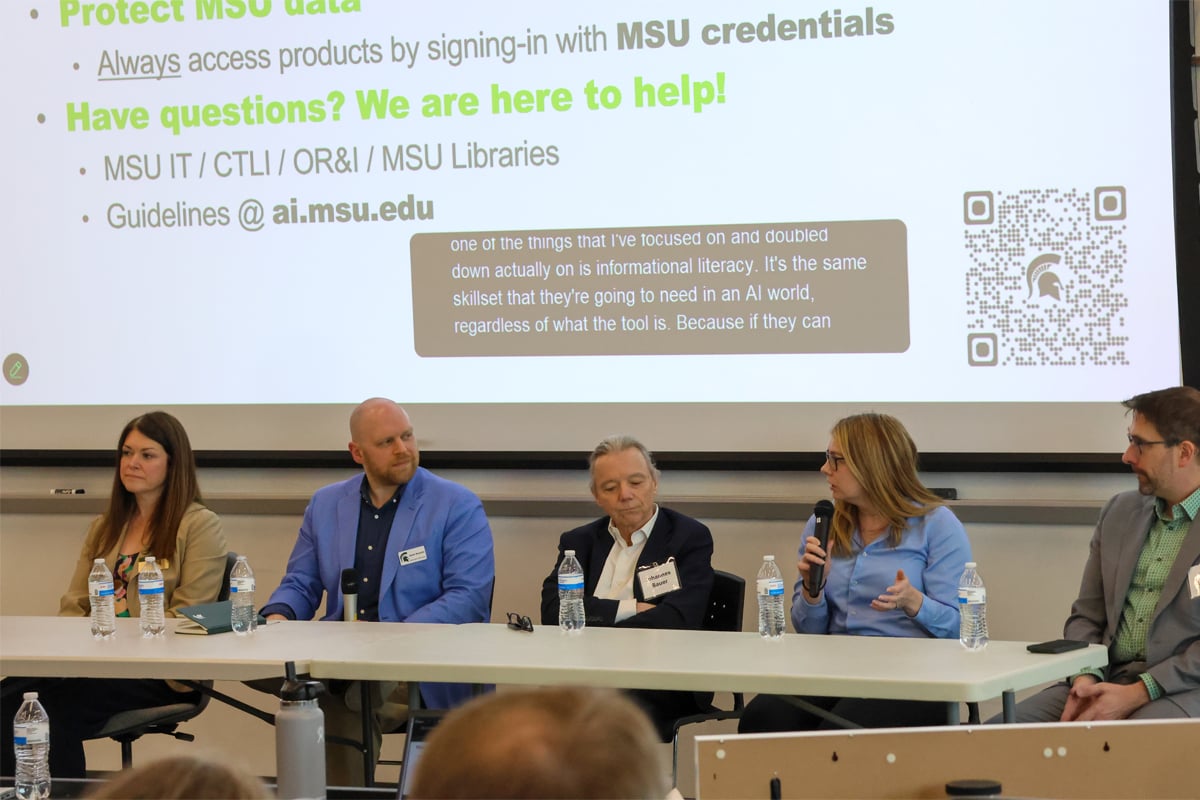
    • MSU AI Guidance – Bree Holtz, Ph.D.
    • What's Available, What's Protected: Using Generative AI with MSU Credentials – Jason Beaudin
  • 11:20 a.m. – Break
  • 11:35 a.m. – Morning Breakout Session with Flash Talk Presenters  
  • 12:20 p.m. – Lunch
  • 1:20 p.m. – Where Can MSU Lead and Innovate in AI?
    • Moderator: Shashank Priya, Ph.D., Vice President for Research and Innovation
    • Panelists:
      • Andrew Christlieb, Ph.D. – College of Natural Science
      • Dànielle DeVoss, Ph.D. – College of Arts and Letters
      • Jesus Trujillo Gomez – Google Cloud
      • Jessica Roy – Accenture
      • Ilan Rubenfield, MD – Henry Ford Health
  • 2:20 p.m. – Break
  • 2:30 p.m. – Afternoon Breakout Session 1
    • Ethical AI in Administration and Operations
    • Ethical AI in Health, Society, and Sustainability
    • Ethical AI in Teaching and Learning
    • Research Collaboration
  • 3:10 p.m. – Break
  • 3:20 p.m. – Afternoon Breakout Session 2
    • Ethical AI in Administration and Operations
    • Ethical AI in Health, Society, and Sustainability
    • Ethical AI in Teaching and Learning
    • Research Collaboration
  • 4 p.m. – Convene Back
  • 4:05 p.m. – Summary Panel with Leadership
    • President Kevin Guskiewicz
    • Provost Laura Lee McIntyre
    • Vice President for Research and Innovation Shashank Priya
    • Vice Provost for Academic Innovation Marcio Oliveira  
  • 4:35 p.m. – End of Program
     

Keynote Speaker

Madelyn Sanfilippo

Madelyn Sanfilippo, Assistant Professor in the School of Information Sciences at the University of Illinois Urbana-Champaign, is an expert on data governance, AI law and policy, and privacy. Her work practically supports decision-making in, management of, and participation in a diverse public sphere. She is an affiliate of the Ostrom Workshop at Indiana University, co-PI of the Workshop on Governing Knowledge Commons, and series editor for Cambridge Studies on Governing Knowledge Commons. Before joining the iSchool, Sanfilippo studied environmental studies, international studies, political science, and Spanish at the University of Wisconsin, Madison (BS) and information science at Indiana University, Bloomington's School of Informatics and Computing (MIS, Ph.D.) She then held postdoctoral fellowships at the Information Law Institute at New York University's School of Law and the Center for Information Technology Policy (CITP) at Princeton University, with affiliations with AI Now and the Tow Center for Digital Journalism at Columbia University.

sanfilippo

Social norms have been significantly challenged by the adoption of AI, including in higher education, where there has been pervasive confusion as to its appropriate or ethical uses, implications for academic integrity, and the responsibility for developing AI literacy. The unique combination of interdisciplinary expertise on AI and direct, early exposure to adverse implications of AI adoption and use situates Universities as critical stakeholders in broader public dialogues on AI governance and ethics. As universities develop AI strategies favoring academic freedom and creativity, the extraordinary diversity of practices and policies offers empirical insights into frameworks and best practices that align AI use and non-use with contextual values.  In this talk, Dr. Madelyn Rose Sanfilippo will discuss her research, critically evaluating and comparing university AI policies and a broader sociotechnical perspective to provide insight into the roles universities are currently playing in governance of AI. She demonstrates the need for greater normative consensus and institutional coordination to ensure such governance is legitimate. 

Flash Talks

Jeremy Van Hof, Ph.D.

This flash talk moves beyond the binary of AI advocacy versus skepticism to focus on pragmatic, human-centered instructional design. We will examine how the rise of generative AI necessitates a shift toward experiential and process-oriented learning, ensuring that the "human in the loop" remains the primary driver of academic rigor and personal growth in large-scale research environments.

Gillian MacDonald, Ph.D.

This flash talk will provide a brief overview of the critical perspectives’ group conversations, and some key issues that have been highlighted throughout our discussions as well as some practical advice. 

Johannes Bauer, Ph.D.

This flash talk provides a brief overview of the role of appropriate policies in harnessing the benefits of AI for human flourishing. It will show how this requires critical review of current policies, the elimination and updating of obsolete rules, the establishment of new guardrails for emerging challenges, and institutional experimentation.

Bree Holtz, Ph.D.

This flash talk will provide a brief overview of MSU’s AI Guidance, highlight key considerations for responsible and effective AI use, and introduce the AI use case submission form as a way to share examples across campus.

Jason Beaudin

This flash talk will provide a brief overview of MSU supported generative AI platforms, explain what tools are available and how they differ, and highlight why signing in with MSU credentials is essential for protecting data, prompts, and institutional information.

Where Can MSU Lead and Innovate with AI? 

As artificial intelligence continues to reshape research, healthcare, education, and the future of work, where are the greatest opportunities for MSU to lead? This panel brings together leaders from research and innovation, digital scholarship, healthcare, engineering, and organizational transformation to explore where the university can drive meaningful impact. Through perspectives spanning creativity, clinical practice, technical innovation, and workforce strategy, the conversation will examine emerging possibilities for leadership, interdisciplinary collaboration, and bold institutional innovation.

Leadership Summary: Where Do We Go From Here? 

To close the summit, university leadership will reflect on the day’s key themes, emerging questions, and the opportunities AI presents for MSU’s future. Bringing together the President Kevin Guskiewicz, Provost Laura Lee McIntyre, Vice President for Research and Innovation Shashank Priya, and Vice Provost for Academic Innovation Marcio Oliveira, this conversation will draw together insights from across the breakout sessions and consider how MSU can move forward with intention, creativity, and shared purpose in shaping the future of AI in higher education and the future workforce. 

Previous AI Summits

Recordings and Presentations

Keynote Speaker

Lauren Klein

Lauren Klein is Winship Distinguished Research Professor and Associate Professor in the departments of Quantitative Theory & Methods and English at Emory University. She directs the Emory Digital Humanities Lab and the Atlanta Interdisciplinary AI Network. Klein’s research brings together computational and critical methods in order to explore questions of gender, race, and justice. She is author (with Catherine D’Ignazio) of the award-winning Data Feminism (MIT Press, 2020), and editor (with Matthew K. Gold) of Debates in the Digital Humanities (Univ. of Minnesota Press), among other publications. She is currently completing Data by Design: A History in Five Charts, forthcoming from the MIT Press in 2025.

Agenda

  • 8:30-9 a.m.: Registration and Networking
  • 9-9:15 a.m.: Opening Remarks
  • 9:15-10 a.m. Keynote Address
  • 10-11 a.m.: Panel Discussion: AI and the Future of Knowledge: What should we be preparing for? 
    The first panel will explore how AI is reshaping the industry and workforce, highlighting opportunities, and how MSU can equip students, faculty, and staff to thrive and lead in this evolving landscape. This session is designed for everyone, regardless of your AI familiarity. Whether you’re just starting to explore the topic or have experience, our goal is to ensure the panel supports all attendees.
    • Moderator: Johannes Bauer, Ph.D.
    • Panelists
      • Anjana Susarla, Omura-Saxena Professor of Responsible AI, Eli Broad College of Business
      • Tara Behrend, John Richard Butler II Endowed Professor, School of Human Resources and Labor Relations, College of Social Science
      • Arun Ross, Martin J. Vanderploeg Endowed Professor, Computer Science and Engineering (CSE), College of Engineering
      • Scott Powell, Ph.D., Chief Data Officer, State of Michigan
  • 11-11:15 a.m.: Break
  • 11:15 a.m.-12:15 p.m.: Panel Discussion: AI as a Partner in Research and Learning
    The panel will explore how AI is reshaping academia, how it can enhance learning and research, and how to foster deeper understanding while addressing ethical considerations and preparing faculty and students to succeed in this rapidly changing space.
    • Moderator: Gillian McDonald, Ph.D.
    • Panelists
      • Jiyoon Yi, Ph.D., Assistant Professor, Department of Biosystems & Agricultural Engineering, College of Agriculture and Natural Resources and College of Engineering
      • Mohammad Ghassemi, Ph.D., Assistant Professor, Computer Science and Engineering, College of Engineering
      • Dennis Kennedy, JD, Director of the Center for Law, Technology & Innovation, College of Law
      • Thomas Hancock, Ph.D., Senior Principal, Thought Leadership & Research, Office of the Chief Learning Officer, Accenture
  • 12:15-1:15 p.m.: Lunch
  • 1:15-3 p.m.: Breakout Sessions
    • AI's Impact on Society and Workforce Readiness, facilitated by Danielle DeVoss, Ph.D.
    • Advancing AI Research & AI-Enhanced Research, facilitated by John Verboncoeur, Ph.D.
    • Transforming Teaching & Learning with AI, facilitated by Sonja Fritzsche, Ph.D.
    • AI in University Operations & Administration, facilitated by Sarah Gretter, Ph.D.
  • 3-3:15 p.m.: Break
  • 3:15-3:45: Breakout Session Report Out
  • 3:45-4 p.m.: Closing Remarks