Each fall, the Ethics Institute helps host a symposium event, bringing together a diverse range of professionals to explore a relevant and timely topic. The event continues to grow and become more collaborative, reaching partners across campus to shape perspectives, educate our community and explore intersections of important areas of focus.
2026 Symposium
The Ethics and Healthcare Symposium will be held on Friday, Nov. 6, 2026. This year’s event will examine the complexities of healthcare as an evolving industry, merging cutting-edge medical care with standard business practices and challenges.
The symposium will feature keynote speaker Mark G. Kuczewski, Ph.D., HEC-C, a dedicated bioethics educator and advocate for health equity. In addition, the symposium includes two engaging panels: The Elephant in the Room, exploring the challenges of creating a healthcare system that serves everyone fairly, and Ethics, Wellbeing, and the Campus Community, which will focus on how campuses try to and could better balance innovation, autonomy, and community responsibility while building healthier and more inclusive learning environments.
This symposium serves as a call for candid dialogue and systemic reform, encouraging leaders to move beyond theoretical ethics and toward accountable, equitable systems that serve both diverse patient populations and broader campus communities fairly.
10:05 a.m.: The Elephant in the Room: Ethics and the Realities of Healthcare
11:05 a.m.: Break
11:20 a.m.: Ethics, Wellbeing, and the Campus Community
12:20 p.m.: Closing Remarks
12:30 p.m.: Lunch and Networking
Keynote Speaker
Mark Kuczewski, Neiswanger Institute for Bioethics & Healthcare Leadership, Stritch School of Medicine
Mark G. Kuczewski, Ph.D., HEC-C, is a Professor of Medical Ethics and Director of the Neiswanger Institute for Bioethics and Health Policy at Loyola University Chicago. A dedicated bioethics educator and advocate for health equity, Dr. Kuczewski is nationally recognized for his work on culture, spirituality, immigration, and the ethical treatment of immigrant patients, and has received numerous honors for his contributions to bioethics education and service.
Panel 1: Elephant in the Room, Ethics and the Realities of Healthcare
Healthcare is built upon a commitment to providing care for all, yet disparities in access, outcomes, and treatment continue to affect marginalized and underserved communities. At the same time, healthcare organizations must navigate complex legal requirements, ethical considerations, and financial pressures that influence decision-making every day.
In this panel, experts will come together to tackle some of healthcare's most challenging and often uncomfortable questions. This candid discussion will explore the systemic factors that contribute to disparities in healthcare, examine real-world ethical dilemmas, and offer perspectives on how healthcare leaders can build more equitable and accountable systems for the communities they serve.
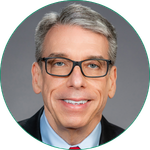
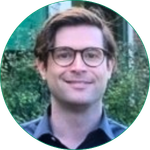
Brian T. Pentland is the Main Street Capital Partners Intellectual Capital Endowed Professor in the Broad College of Business. For the last several years, his research on the complexity of organizational routines in healthcare organizations has been supported by the National Science Foundation. He received his Ph.D. in Management from the Massachusetts Institute of Technology in 1991.
Mason Marks, M.D., J.D., is the MSU Research Foundation Distinguished Professor of Law at MSU College of Law, where he directs the program on Health and Life Sciences Law. His scholarship focuses on the intersection of law, health care, emerging technologies, artificial intelligence, drug policy, and bioethics. Before joining MSU, he held appointments at Harvard Law School and Yale Law School and co-founded Harvard's Project on Psychedelics Law and Regulation. His research has appeared in leading law and medical journals, and his commentary has been featured by major national media outlets, including The New York Times, The Wall Street Journal, NPR, and The New Yorker.
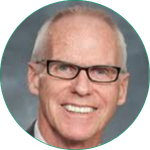
Dr. Jim Sylvain is an Associate Professor in the Department of Physical Medicine and Rehabilitation at MSU. He also works in Physical Medicine and Rehabilitation at the University of Michigan Health – Sparrow. Sylvain earned a bachelor's degree in Philosophy and Classical Languages from Don Bosco College in New Jersey and his D.O. degree from the College of Osteopathic Medicine of the Pacific in California. He completed his residency training at MSU and has held leadership roles in academic medicine, private practice and professional organizations, including serving as president of the California Society of Physical Medicine and Rehabilitation. .
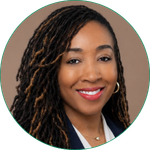
Daphne C. Watkins, Ph.D., EMBA, is the Letha A. Chadiha Collegiate Professor of Social Work and a University Diversity and Social Transformation Professor at the University of Michigan, where she is also the inaugural director of the Master of Arts in Social Impact Leadership program. A mixed-methods researcher with more than 100 peer-reviewed publications and three books, she has spent two decades designing, implementing, and evaluating mental health interventions for men and boys across the United States, Canada, and Australia. She currently serves as a co-principal investigator on an NIH-funded national study of how the structure of provider networks shapes racial and gender disparities in heart failure care.
Panel 2: Ethics, Wellbeing, and the Campus Community
In addition to providing education, universities are responsible for supporting the health and wellbeing of students, faculty, and staff. As our campus navigates evolving technologies, mental health needs, public health challenges, research ethics, and questions of autonomy and access, we face complex ethical decisions that shape the daily experiences of our community.
In this panel, scholars and practitioners from across disciplines will explore the ethical questions emerging in higher education and campus health. From digital health to public health communication, student wellbeing, and equitable access to care, panelists will examine how universities balance innovation, individual rights, and institutional responsibility, all alongside community trust.
Dr. Samantha Gailey is the 1855 Assistant Professor of Environmental Health Equity in MSU’s Department of Forestry and C.S. Mott Department of Public Health. Her research, teaching and outreach are grounded in environmental justice and focus on how neighborhood resources, particularly access to green space, influence health disparities among mothers, infants and children. Using interdisciplinary methods that draw from epidemiology, psychology and geography, she studies how place-based policies and environmental changes can advance health equity. She also leads MSU’s GREEN (Growing Environmental Equity in Neighborhoods) Lab and is helping develop interdisciplinary education and research initiatives focused on the relationship between natural environments and human health.
Swapna Anil Hingwe, D.O., M.A., is Director of Counseling and Psychological Services and Lead Psychiatrist for Campus Health Services within University Health and Wellbeing at MSU. A board-certified psychiatrist with a master's in counseling psychology, she has spent 15-plus years in collegiate mental health. She leads a team of 40+ clinical and administrative staff. Her work centers on late adolescence and emerging adulthood, with deep expertise supporting students of color, first-generation, international, LGBTQIA2+, and neurodivergent students. She brings a decolonial, dignity-centered, and culturally humble lens to caring for our students and our campus community.
Michelle T. Pham is an Assistant Professor in the Center for Bioethics and Social Justice and the Department of Medicine at MSU. Her neuroethics research interests include post-trial care obligations for first-in-human BCI studies, rethinking what it means to conduct engaged research with neural device users through community-engaged research, and the role of institutions like IRBs in promoting ethical implantable neural device research.
Dr. Monique Mitchell Turner is Professor and Chair of the Department of Communication at MSU and former Associate Dean at George Washington University's Milken Institute School of Public Health. A persuasion scholar, she studies how emotions like anger, fear, guilt, and shame shape responses to health, risk, and political messages. She developed the Anger Activism Model, which explains when anger fuels constructive action. Her research has been funded by HHS, the FDA, and the CDC. Turner is a former Senior Editor of Health Communication, has chaired divisions of NCA and ICA, and was named an ICA Fellow in 2023.
The Sustainability and Ethics Symposium was held on Friday, Nov. 14, 2025, bringing together faculty, staff, students, practitioners, and community members to explore pressing challenges and bold solutions at the intersection of ethics, innovation, and sustainability. This dynamic and interdisciplinary event was hosted by the Ethics Institute, Center for Bioethics and Social Justice, the Center for Ethical and Socially Responsible Leadership, the Frank J. Kelley Institute of Ethics and the Legal Profession, and the Office of Sustainability. The symposium explored ethical sustainability issues from a global perspective, highlighted current research topics, and showcased practices happening on the campus of Michigan State University.
Highlights of the Symposium
Keynote Speaker: Sarvesh Suri
Panel 1: Elephant in the Room: What Aspects of Sustainability are Not Getting Enough Attention?
Panel 2: Scraps, Streams, & Seeds - Sustainability at MSU
How Water Speaks: Freshwater Futures from the Mekong to Michigan
The Ethics Institute and the Broad College of Business Center for Ethical and Socially Responsible Leadership, with support from the Office of Research and Innovation and the Office of International Studies and Programs, partnered with True Elements to host The Ethics and Water Symposium on Nov. 6, 2023. Together, they explored how C-Suite and Government leaders can tackle water management challenges while creating new opportunities. The symposium was dynamic and multi-faceted, much like water itself.
Highlights of the Symposium
Keynote Speaker: Mr. Saroj Kumar Jha, Global Director for the World Bank Group’s Water Global Practice (GP), discussed the human aspect of water from an ethical lens.
Following Mr. Jha, scholars from the MSU community delivered flash talks to provide an overview of their research and work in water.
After lunch, the symposium explored the role of water in sustainability, featuring a panel of experts.
Then, True Elements shared how their organization utilizes state-of-the-art scientific and AI capabilities to translate water’s complex, multi-dimensional and interrelationships into clearly understandable patterns and scores for reliable analysis, forecasting, and informed decision-making.
Lastly, the event closed with a panel of MSU experts highlighting how people with vastly different backgrounds can work together to address water challenges.
Featured MSU speakers included Teresa K. Woodruff, Thomas Jeitschko, Judith Whipple and Sriram Narayanan.
The Ethics of Big Data and Artificial Intelligence Conference occurred on Nov. 3, 2022. The featured speaker was JoAnn Stonier from Mastercard, who provided a high-level overview of the ethical issues and challenges she faces in her industry. Scholars from the MSU community also delivered five-minute flash talks to share an overview of their work in big data and artificial intelligence. Flash talks were organized into five thematic panels, with an integrative discussion closing out each panel, which explored various topics ranging from “Bias and Data Sourcing of AI” to “Societal Applications of AI and STEM.”
Highlights of the Conference
Keynote Speaker: JoAnn Stonier, who emphasized ethical issues and challenges in data innovation and strategy.
Featured MSU speakers included Teresa K. Woodruff, Linda Sheryl Greene, Christopher P. Long and Judith Whipple, who delivered flash talks in thematic areas.
The inaugural MSU Ethics Symposium, held on Oct. 14, 2021, helped further the goal of establishing an MSU Ethics Institute, where leading-edge research in ethical theory shapes global ethical practice and knowledge of ethical practices inform the further development of theory.
Highlights of the Symposium
Featured Speakers: Anita Allen discussed how interdisciplinary outreach, practice and pedagogy come together. Kirk O. Hanson discussed how centers and institutes are created to work collaboratively. Both speakers also focused on the philosophical and practical dimensions of establishing an Institute.
Following each keynote speaker was a focus group of faculty members who are interested in the various issues of outreach, research, practice and pedagogy.
Featured MSU speakers included Samuel L. Stanley Jr., Teresa K. Woodruff, Linda Sheryl Greene and Christopher P. Long.